
Energy communities at a glance
Does your own energy generation system produce so much electricity that you would like to make it available to your tenants, neighbours or interested acquaintances in the community? Or would you like to use sustainable electricity from your neighbour? You can do this by forming a private consumption association (PCA), a virtual self-consumption association (vPCA) or a local electricity community (LEC).
As a participant, you reduce your energy costs and, as a producer, you generate higher yields from the electricity you produce: a classic win-win situation and an active contribution to sustainability.
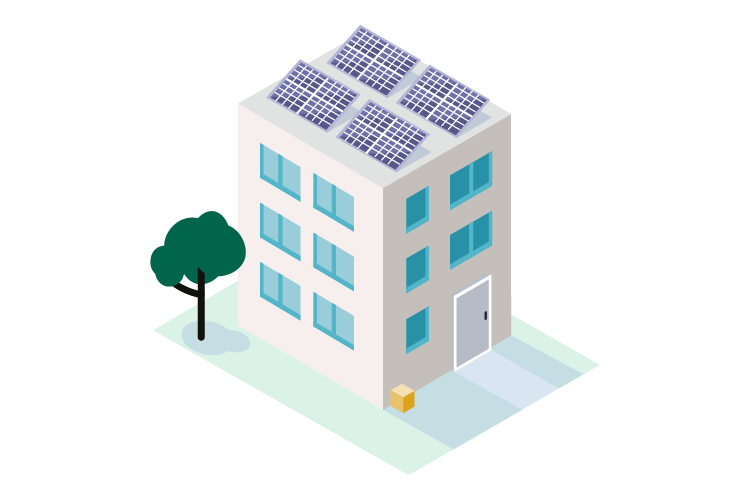
PCA
A PCA allows multiple parties – e.g. in an apartment building – to share locally produced solar power. They share a grid connection and settle their electricity consumption among themselves. The surplus electricity is fed into the grid and remunerated.
- Shared grid connection
- Separate meters for measuring the electricity consumption of consumers
- Production output at least 10 per cent of the connected load
Max. 80 percent of electricity costs in the corresponding standard tariff of the distribution network operator
- The operator of the PCA receives a total bill from the distribution network operator for the total amount of electricity consumed.
- The operator is responsible for passing on the costs within the PCA (both grid electricity and solar power).
- This task is often outsourced to external service providers such as Primeo Energie Switzerland Ltd.
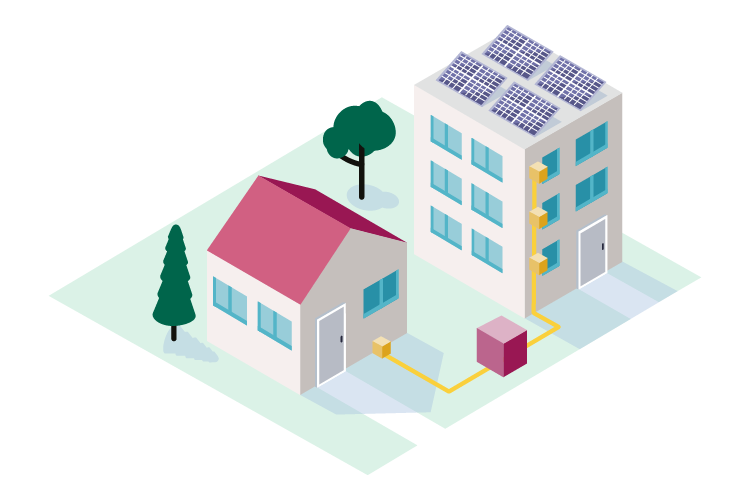
vPCA
The vPCA connects several nearby buildings. The individual connection points are virtually linked to form a PCA via a common node. They settle the electricity consumption among themselves. The surplus electricity is fed into the grid and remunerated.
- Common connection point (e.g. distribution cabinet or transformer station)
- Production output at least 10 percent of the connected load
Max. 80 percent of electricity costs in the corresponding standard tariff of the distribution network operator
- The operator of the vPCA receives a total bill from the distribution network operator for the total amount of electricity consumed.
- The operator also receives the measurement data from the participants.
- The operator is responsible for passing on the costs within the vPCA (grid electricity and solar power).
- This task is often outsourced to external service providers such as Primeo Energie Switzerland Ltd.
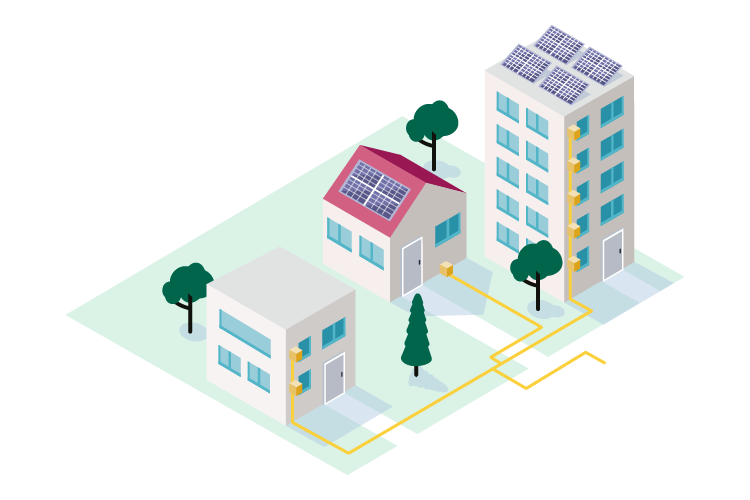
LEC
From 2026, it will be possible to buy and sell sustainable electricity within the community. This will create a local marketplace for sustainable electricity, opening up new opportunities for the use of sustainably produced energy. The electricity exchanged in LEC is settled between the parties involved. Surplus electricity is fed into the grid and remunerated.
- Same municipality
- Same grid level (maximum grid level 5)
- Production output at least 5 percent of the connected load
- LEC electricity price freely definable among participants
- LEC electricity customers pay the network operator a reduced network usage tariff (40% or 20% reduction depending on the situation).
- Each LEC participant receives a separate bill for the electricity they have purchased from the distribution network operator (including grid usage and levies).
- The operator receives the LEC measurement data from the participants.
- The operator is responsible for billing the LEC electricity.
- This task is often outsourced to external service providers such as Primeo Energie Switzerland Ltd.